
AI-Powered Threats: How Artificial Intelligence Is Changing Risks for High-Profile Individuals
How AI Is Transforming Threat Capabilities
The transformation of threat capabilities through AI technology cannot be overstated. While previous social engineering attempts might have been identified through language inconsistencies or required significant human resources, today’s AI tools have fundamentally changed the game.
AI-Generated Phishing and Personalized Social Engineering
One of the most concerning developments is how AI enables highly personalized phishing attempts using information scraped from multiple sources. Threat actors can now:
- Automatically compile digital footprints from scattered sources
- Create convincing personalized communications that reference specific details about the target’s life, work, and relationships
- Deploy these attacks across thousands of potential targets simultaneously
- Continuously refine their approach based on success rates
For CEOs and business leaders, this means that traditional “red flags” in suspicious communications are becoming increasingly difficult to spot as AI-generated content becomes indistinguishable from legitimate requests.
Voice Cloning and Impersonation Fraud
Perhaps most alarming is the emergence of voice cloning technology that can mimic an executive with just seconds of audio sample. This capability has already enabled several high-profile fraud cases where:
- Threat actors created convincing voice replicas of CEOs
- Financial staff received seemingly authentic calls requesting urgent wire transfers
- Organizations lost millions before detecting the deception
For corporate security teams, this means that voice authentication can no longer be considered a foolproof verification method for sensitive requests or authorizations.
AI Surveillance Through Digital Footprints
AI systems are particularly effective at identifying patterns in digital behavior. This allows threat actors to analyze when and where high-profile individuals may be most vulnerable. These systems can:
- Analyze social media posts to detect regular schedules and routines
- Identify security gaps or moments of reduced protection
- Predict future locations based on historical behavior
- Facilitate automated surveillance through digital footprint tracking
How Risk Exposure Varies Across Industries and Public Profiles
Risk exposure varies significantly across different profiles and industries. Corporate executives in highly regulated industries may face different exposure challenges than those in technology or retail sectors, while public figures like politicians or entertainers have their own unique risk profiles.
Each profile presents unique digital footprint vulnerabilities based on:
- Regulatory requirements and public disclosure obligations
- Public visibility and media attention
- Sector-specific business practices and communication patterns
When Threats Against Public Figures Become Organizational Crises
For organizations, the consequences of these AI-powered threats extend far beyond protecting individual executives. A single successful attack can trigger an organizational crisis with far-reaching implications for:
- Operational continuity
- Market position and competitive advantage
- Brand reputation and public trust
- Revenue streams and shareholder value
- Critical infrastructure and intellectual property
When Digital Exposure Escalates into Physical Threats
These threats aren’t theoretical. In one documented case, a technology CEO faced escalating anonymous harassment across personal and business communication channels that eventually led to physical surveillance of their residence. Only through swift digital footprint reduction by Nisos analysts, and an enhanced security response, was the family’s safety ensured.
This pattern of digital exposure leading to physical threat has become increasingly common across various high-profile individuals.
A Layered Approach to Protecting Public Figures
To stay ahead of these evolving AI-powered threats, organizations and individuals need to integrate multiple layers of protection, including:
- Intelligence-driven risk management
- Continuous digital footprint monitoring
- Proactive digital hygiene practices
- Comprehensive personal information removal strategies
- Adversary disruption capabilities
Steps to Protect Against AI-Enabled Threats
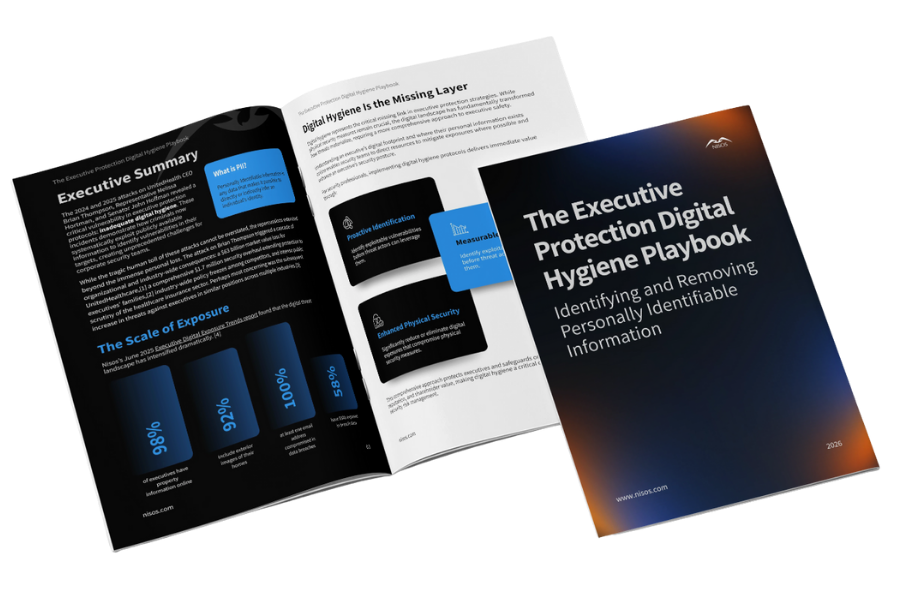
Understanding these advanced threats is only the first step. Our comprehensive Executive Protection Digital Hygiene Playbook provides detailed strategies for identifying and mitigating these AI-powered risks before they materialize.
Download the playbook today to learn how you can protect high-profile individuals, their families, and organizations from the next generation of AI-enabled threats.
Frequently Asked Questions (FAQs) on AI-powered Threats Targeting High-Profile Individuals
What AI-powered threats target high-profile individuals?
How does AI make phishing attacks more dangerous?
What is voice cloning fraud and how is it used in attacks?
How can digital footprints be used for surveillance?
How can organizations reduce AI-enabled risks to public figures?
About Nisos®
Nisos is a trusted digital investigations partner specializing in unmasking human risk. We operate as an extension of security, risk, legal, people strategy, and trust and safety teams to protect their people and their business. Our open source intelligence services help enterprise teams mitigate risk, make critical decisions, and impose real world consequences. For more information, visit: https://nisos.com.