
How to Detect Identity Fraud in Remote Hiring
Remote hiring has made that problem easier to exploit.
Candidates can move through the hiring process without raising immediate concerns. The warning signs are often subtle at first: a recently created LinkedIn profile, work history that changes across platforms or records, or changes in communication patterns once onboarding starts.
Most hiring teams are not missing these signals because they are careless. The process simply was not designed to identify and connect them.
Detecting identity fraud now requires more than resumes, interviews, and document checks alone. Hiring teams need ways to evaluate identity, behavior, communication, and consistency before access is granted.
Why Traditional Hiring Controls Miss Identity Fraud
Traditional hiring controls still matter. Background checks validate records. Identity verification platforms confirm that documents appear legitimate. Interviews help teams evaluate communication and experience.
The challenge is that these controls often review information separately instead of evaluating whether the full picture around a candidate makes sense. A candidate using a stolen or synthetic identity may still provide legitimate-looking documents and complete the hiring process without raising immediate concerns.
As remote hiring becomes more common, that limitation matters more.
Most Fraudulent Candidates Don’t Look Suspicious
Remote hiring changes how teams evaluate people.
Without in-person interaction, hiring decisions often depend on resumes, interviews, and communication patterns alone. That makes small behavioral signals easier to miss.
For example, a candidate may struggle to explain previous work in practical detail. Communication patterns may change between interviews and onboarding. Someone claiming years of experience may leave behind very little professional history online.
None of these details alone confirms fraud. The concern is the overall pattern they create together.
Detecting Identity Fraud Requires More Than Document Verification
Effective detection depends on more than a single identity document or interview performance. Hiring teams need to evaluate how identity, behavior, consistency, and access align throughout the hiring process.
Identity
Identity verification should extend beyond the documents provided during onboarding.
A candidate claiming years of senior-level experience will have built up an established professional history. When that history feels unusually limited or inconsistent, it deserves a closer look.
Signals worth reviewing may include:
- Recently created LinkedIn profiles
- Employment timelines that do not fully line up
- Generic or patterned email addresses
- Very limited online history for experienced candidates
A limited digital footprint alone should not disqualify a candidate. It’s an indication that we should fill the gaps in the professional history presented and understand the broader context surrounding it.
Behavior
Interview behavior can reveal details that resumes and documentation do not.
Some candidates interview confidently during structured conversations, but struggle once discussions become more specific or unscripted. Others may avoid follow-up questions or rely heavily on rehearsed responses. This could be an indication that the candidate is relying on pre-written responses, or using an AI assistant to generate model answers.
Potential warning signs can include:
- Delayed or overly scripted answers
- Difficulty explaining previous work in practical detail
- Repeated glances away from the screen
- Reluctance to engage in live demonstrations or follow-up discussion.
Concerns usually become clearer over the course of multiple conversations and interactions.
Consistency
Identity fraud often creates details that raise questions across the hiring process.
A resume may present experience that does not fully match interview depth. Communication patterns may shift between interviews and onboarding. Payroll details, shipping information, or collaboration habits may also begin to conflict with previous records.
The earlier these details are reviewed together, the easier it becomes to identify potential concerns before onboarding moves forward.
Access
The hiring process does not end once onboarding begins.
Behavior should continue to align with the level of access granted to the employee. Unusual remote access activity, unauthorized tools, or collaboration patterns that differ significantly from interview performance may all warrant closer review.
Examples can include:
- Logins from unexpected locations
- Use of unauthorized remote access software
- Sudden changes to payroll or shipping information
- Consistent avoidance of live collaboration
The goal is to identify concerning inconsistencies early, before they become larger problems later in the hiring process.
Questions Hiring Teams Should Be Asking
Strong hiring processes create opportunities to validate experience, identify inconsistencies, and review details more closely before onboarding moves forward.
Questions worth asking during the hiring process may include:
- Can the candidate explain previous work without relying on rehearsed answers?
- Does the candidate’s online history align with their claimed experience?
- Do communication patterns stay consistent throughout interviews and onboarding?
- Do onboarding details match previous records and documentation?
- Are small inconsistencies appearing across multiple stages of the hiring process?
No single answer confirms fraud on its own. What matters is whether those details continue to make sense throughout the hiring process.
The Goal Is Not Friction. It’s Visibility.
Remote hiring has changed how organizations evaluate trust.
Resumes, interviews, and onboarding workflows can all appear legitimate while important details remain disconnected across the hiring process. Hiring teams may validate documents successfully without ever seeing the broader pattern surrounding a candidate.
That challenge is becoming harder to manage as hiring, HR, security, and insider risk teams often operate separately from one another.
Identity fraud is rarely the result of a single missed detail. More often, it succeeds because no one is responsible for connecting the full picture early enough in the hiring process.
Organizations that review hiring signals more collaboratively are often better positioned to investigate concerns before trust, access, and sensitive systems are placed in the wrong hands.
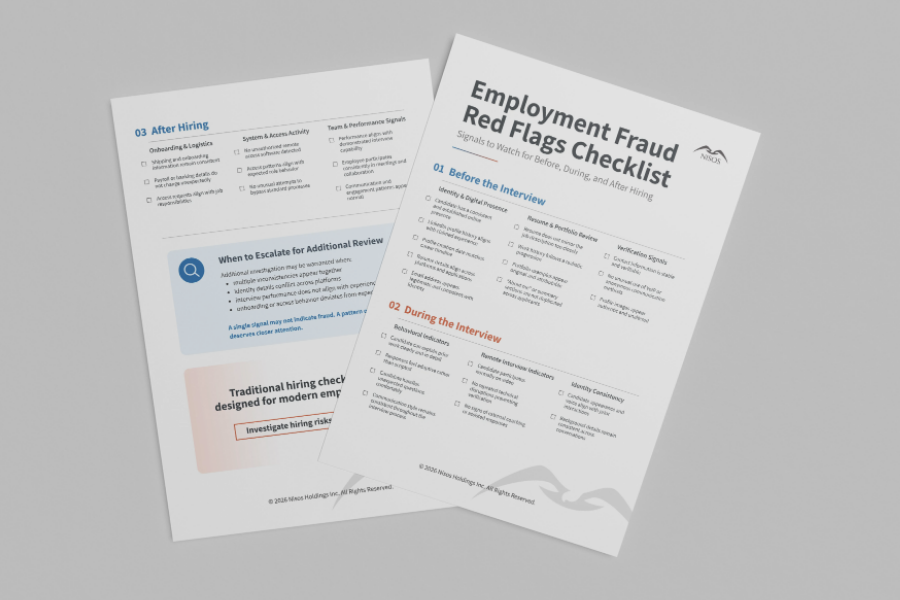
Employment Fraud Red Flags Checklist
Hiring fraud often blends into normal hiring activity. More often, concerns appear through details that stop lining up across resumes, interviews, onboarding, and access activity.
Download the Employment Fraud Red Flags Checklist to help your team spot potential warning signs before, during, and after hiring.
Investigate Hiring Risks Before Access Is Granted
Identity fraud often looks legitimate during remote hiring. The resume fits the role. The interview goes smoothly. The background check passes.
Concerns often become clearer as details stop lining up across interviews, onboarding, communication, and access activity.
Nisos helps organizations investigate suspicious hiring patterns and identify risks that traditional screening often misses.
Learn how Nisos helps organizations detect identity fraud early in the hiring process.
Frequently Asked Questions (FAQs) on Identity Fraud in Remote Hiring
What are the signs of identity fraud during remote hiring?
Can background checks detect identity fraud in hiring?
How do companies detect fake job candidates?
Why is remote hiring more vulnerable to identity fraud?
What is the difference between employment identity theft and hiring fraud?
About Nisos®
Nisos is a trusted digital investigations partner specializing in unmasking human risk. We operate as an extension of security, risk, legal, people strategy, and trust and safety teams to protect their people and their business. Our open source intelligence services help enterprise teams mitigate risk, make critical decisions, and impose real world consequences. For more information, visit: https://nisos.com.