
World Cup, World Stage: Why High-Profile Events Amplify Executive Risk
Executive risk during high-profile events expands quickly when visibility, travel, and public attention converge. The 2026 FIFA World Cup will be the largest sporting event ever held in North America, with matches across 16 cities and, in combination with the FIFA Club World Cup, an estimated economic impact of USD 47 billion. For executives at major corporations, this presents an unprecedented opportunity: premium hospitality experiences, high-visibility client entertainment, and global networking at the world’s most watched sporting event.
But with opportunity comes risk. And when executives step onto the world’s biggest stage, the threats that target them become amplified in ways that traditional security measures weren’t designed to handle.
Executive Risk During High-Profile Events at a Glance
- Major events significantly increase executive visibility and digital exposure.
- Most executive threats begin with reconnaissance, not malware.
- Executive threat intelligence helps identify emerging risks before they become incidents.
- Continuous monitoring and attribution improve executive protection before, during, and after major events.
Why High-Profile Events Amplify Executive Risk
Major sporting events don’t just attract global audiences, they attract global attention from threat actors who understand that high-profile gatherings create unique targeting opportunities. The 2026 World Cup will put executives in environments where their visibility, accessibility, and digital footprint expand far beyond their normal operating parameters.
Consider what happens when a Fortune 500 CEO attends a World Cup match. They’re not just watching soccer, they’re creating intelligence opportunities for anyone motivated to target them. Social media posts reveal travel patterns and location data. Hospitality events provide social engineering opportunities. Business relationships become visible through photos and public appearances. The executive protection measures that work in controlled corporate environments become insufficient when executives are operating on a global stage with millions of observers.
This isn’t theoretical. We recently worked with a client whose CEO was targeted by persistent, escalating harassment across multiple channels including personal phone numbers, email addresses, and social media accounts. Our investigation revealed that the threat actor had conducted detailed surveillance of the CEO’s residence, gathering intelligence from publicly available sources to build a comprehensive targeting profile. The case demonstrated how easily accessible information can be weaponized by motivated actors, and how quickly digital harassment can escalate to physical security concerns.
Now imagine that same dynamic playing out during a World Cup, where executives’ activities and associations are amplified across global media and social platforms.
Executive Risk Extends Beyond the Corporate Perimeter
The fundamental challenge is that executive risks during major events originate outside the corporate security perimeter. Your network monitoring tools can’t see the social media posts that reveal travel schedules. Your endpoint detection can’t identify the hospitality industry insider gathering intelligence on VIP attendees. Your access controls can’t prevent the social engineering attempts that target executives through their World Cup experiences.
This creates a blind spot that traditional executive protection approaches struggle to address. Many solutions focus on device-level security, protecting executives’ personal phones and laptops. While important, this approach misses the broader intelligence picture: who is targeting your executives, how are they gathering information, and what are they planning to do with it?
The most sophisticated threats don’t start with malware, they start with reconnaissance. Threat actors build detailed profiles of their targets using social media activity, travel patterns, business relationships, and public appearances. Major events like the World Cup provide an intelligence goldmine for this type of targeting, and executives who attend can become high-value surveillance subjects for months or years afterward.
Why Attribution Matters for Executive Security
When executive targeting occurs, the critical question isn’t just “what happened?” but “who’s behind it?” This is where human risk intelligence becomes essential. Understanding attribution — connecting digital personas to real individuals and uncovering the full scope of targeting activity — enables decisive response rather than reactive defense.
Traditional security approaches excel at detecting incidents after they occur. But executive protection during major events requires getting ahead of threats before they materialize. This means understanding not just what executives are exposed to, but who might be motivated to exploit that exposure and what capabilities they possess.
Our approach combines analyst-led investigation with technology-enabled intelligence gathering to answer these attribution questions. When we identify threats targeting executives, we don’t just alert, we investigate. We uncover who’s behind the targeting, what their capabilities and intentions appear to be, and what protective measures will be most effective.
Importantly, this intelligence gathering uses publicly and commercially available information, with no endpoint agents required on executives’ personal devices. Many executives are understandably reluctant to install corporate monitoring software on their personal phones and laptops. Our solution addresses this concern by providing protective intelligence that doesn’t require access to personal devices or communications.
Building a Modern Executive Protection Strategy
Effective executive protection during major events requires both technological capabilities and human expertise. Our Executive Shield platform provides continuous monitoring and structured assessment capabilities that clients can use to maintain ongoing visibility into executive risk exposure. When threats emerge that require deeper investigation, our analyst-led services provide the human intelligence and attribution capabilities that technology alone cannot deliver.
This dual approach — client-led monitoring enhanced by analyst-led investigation — helps to ensure that executives can participate safely in high-profile events like the World Cup without compromising their security posture or their business opportunities.
Preparing for Executive Risk During High-Profile Events
The 2026 World Cup represents both tremendous opportunity and amplified risk for executives and their organizations. Success requires recognizing that traditional security measures, while necessary, are insufficient for protecting executives when they step onto the world stage.
In an upcoming post, we’ll explore the specific ways that social media exposure creates targeting opportunities and how executives can maintain strategic visibility while managing the associated risks.
The goal isn’t to keep executives away from major events, but to ensure they can participate safely and confidently, with the intelligence they need to understand and manage the risks that come with global visibility.
Build a Stronger Executive Protection Strategy
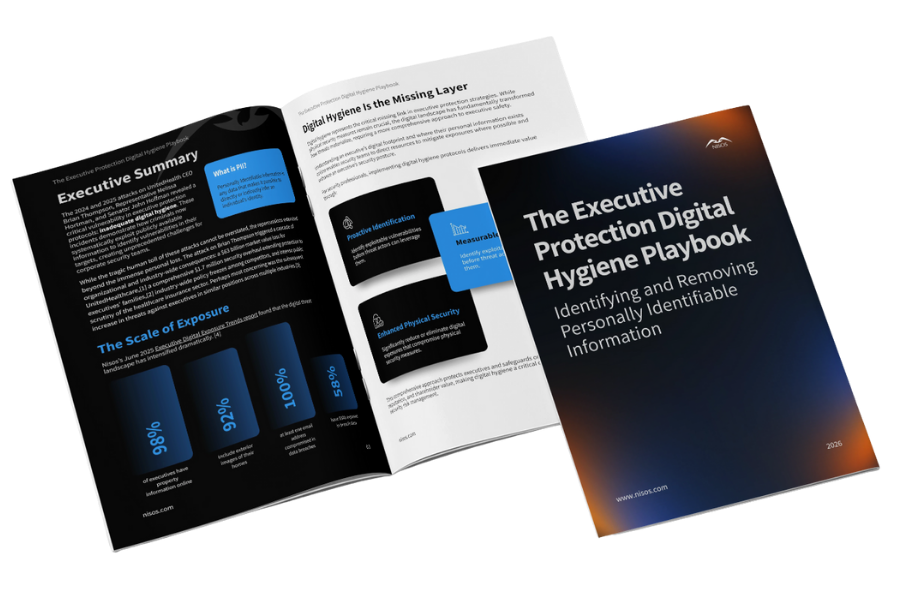
Planning for major events requires more than physical security. Download our Executive Protection Playbook for a comprehensive framework on managing executive risk in high-visibility environments.
Frequently Asked Questions on Executive Risk during High-Profile Events
Why does executive risk increase during high-profile events?
What types of threats target executives during major events?
How can organizations reduce executive risk during high-profile events?
No single signal is disqualifying on its own. Patterns across categories are what typically warrant closer investigation.
Why is attribution important in executive threat intelligence?
About Nisos®
Nisos is a trusted digital investigations partner specializing in unmasking human risk. We operate as an extension of security, risk, legal, people strategy, and trust and safety teams to protect their people and their business. Our open source intelligence services help enterprise teams mitigate risk, make critical decisions, and impose real world consequences. For more information, visit: https://nisos.com.