
Nisos Featured on NBC News for North Korean Employment Fraud Investigation
NBC News covered our investigation into industrial-scale infiltration of US companies. Here’s what it reveals about the future of identity verification.
As you may have seen in recent NBC News coverage (watch here), when a suspicious job candidate applied to Nisos last summer, we saw an opportunity to do more than just reject the application. Working with law enforcement, we turned the tables, running the North Korean operative as an unwitting intelligence source for several months to understand how these employment fraud schemes actually work.
We previously shared findings from this investigation in our earlier research report, but NBC’s coverage highlights operational details from our analysis that reveal the full industrial scale and sophisticated human dynamics of DPRK employment fraud.
What the NBC News Investigation Revealed
The numbers NBC reported tell a compelling story of organized, systematic fraud. This single cell submitted over 170,000 job applications across 22 operatives between December 2024 and September 2025, yielding 76 employment offers from US companies. Technology companies comprised 42.6% of their successful targets, with developers and engineers representing over 70% of pursued roles. These are positions that offer high salaries, established remote work culture, and in some cases, limited security screening.
But the real revelation isn’t in the statistics. It’s in understanding how they operate as a coordinated organization targeting the gaps in our identity verification processes.
The Human Side of Sophisticated Deception
Our investigation revealed a sophisticated hierarchy with administrators, managers, team leads, and operatives, each with defined roles and responsibilities. They used Discord for daily coordination and a custom dashboard to track performance metrics across the entire cell. Individual operatives managed between one and four fake personas simultaneously, with strict operational security measures to avoid detection.
The cell’s pre-employment preparation exposed critical vulnerabilities in traditional identity verification approaches. Operatives didn’t just steal identities, they built comprehensive validation systems. They created closed-loop reference networks where operatives provided employment verification for each other’s personas. They purchased identity packages from Telegram brokers for $20-200 per item. They obtained fraudulent but legitimate-looking driver’s licenses through state DMV systems, then digitally manipulated photos to match whoever would be taking drug tests or attending interviews.
Most concerning was their recruitment of US-based “natives”, American citizens who served as front-facing employees and managed laptop farms for remote access. These facilitators were recruited through Reddit, Discord, and even adult cam sites, often targeting people in financial distress with offers of 50/50 salary splits.
AI-Enabled Interview Deception
The cell’s interview tactics showcased how AI tools are being weaponized to defeat identity verification at the human level. Interviews were conducted using operatives or US-based facilitators, with AI-generated responses appearing on screens enabling the interviewee to maintain eye contact with interviewers. They practiced accent training through specialized apps and maintained detailed calendars to coordinate overlapping interviews across multiple personas.
This level of coordination and technological sophistication demonstrates why traditional background checks, which verify documents but not the person behind them, are increasingly insufficient for today’s threat landscape.
Three Models for Employment Execution
Once hired, the cell operated through distinct models that balanced operational security with profit maximization. This flexibility allowed individual operatives to manage multiple simultaneous employments while maintaining plausible personas across different companies. It’s a level of operational sophistication that goes well beyond individual bad actors, and challenges fundamental assumptions about identity verification.
What This Means for People Teams
For HR and talent acquisition leaders, this investigation reveals how sophisticated employment fraud has become. Traditional hiring processes focus on verifying credentials and conducting background checks… but what happens when the documents are real but the person behind them isn’t?
The DPRK cell’s success demonstrates that synthetic identities, AI-generated personas, and coordinated reference fraud can defeat document-based verification systems. When operatives obtain legitimate driver’s licenses through state DMV systems and create closed-loop validation networks, standard identity verification approaches become inadequate.
Organizations need solutions that go beyond asking “Are these documents legitimate?” to answer the deeper question: “Is this person who they claim to be?” This requires verifying identity integrity: cross-referencing an individual’s provided information against multiple independent sources that cannot be fabricated retroactively.
The Security Implications
From a security perspective, this isn’t just a hiring problem, it’s a fundamental challenge to organizational security architecture. When your perimeter security assumes that everyone inside is who they claim to be, infiltration by sophisticated state actors creates systemic risk that traditional monitoring tools may not be able to detect.
Security teams need visibility into identity-related risks that exist outside the firewall: the external coordination, the behavioral patterns, and the digital footprints that reveal when someone isn’t who they appear to be. This requires intelligence capabilities that can attribute digital personas to real people, and identify when that attribution fails.
Bringing Security and People Teams Together
The most effective defense against sophisticated employment fraud requires Security and People teams to work in partnership. HR leaders bring deep expertise in hiring processes and candidate experience, while Security teams contribute threat intelligence and risk assessment capabilities.
Organizations that successfully defend against these threats create integrated approaches where identity verification becomes a shared responsibility: with People teams understanding the security implications of hiring decisions, and Security teams supporting HR with intelligence-driven insights about candidate risk.
What Comes Next
For over four years, Nisos has been helping clients identify and prevent employment fraud. But this DPRK IT Worker Fraud investigation provided something different: a window into the human processes behind the technical indicators we typically track.
Understanding how these operations actually function — their organizational structure, recruitment methods, quality controls, and scaling mechanisms — is essential for building effective defenses. The sophistication of their personas, the coordination of their operations, and the scale of their activities represent a threat that requires dedicated human intelligence to detect and counter.
The reality is stark: if you’re hiring remote technology talent, you’re being targeted. The cell we tracked infiltrated companies ranging from small app developers to Fortune 50 enterprises. The threats targeting your people and infiltrating your workforce originate outside your firewall — where traditional security tools and conventional identity verification have no visibility.
This research demonstrates why organizations need solutions that verify not just documents, but the person behind them. As synthetic identities and AI-enabled fraud become more sophisticated, the question “Is this person who they claim to be?” has become one of the most consequential, and most difficult, that organizations can ask.
Read our DPRK research reports to access detailed operational insights, case examples, and intelligence indicators:
- Exposing a Fraudulent DPRK Candidate: How Nisos Identified a Suspected North Korean Operative
- Inside a DPRK Employment Fraud Operation
Explore our Employment Shield solutions to learn how Nisos helps organizations detect and prevent sophisticated employment fraud and identity-based threats.
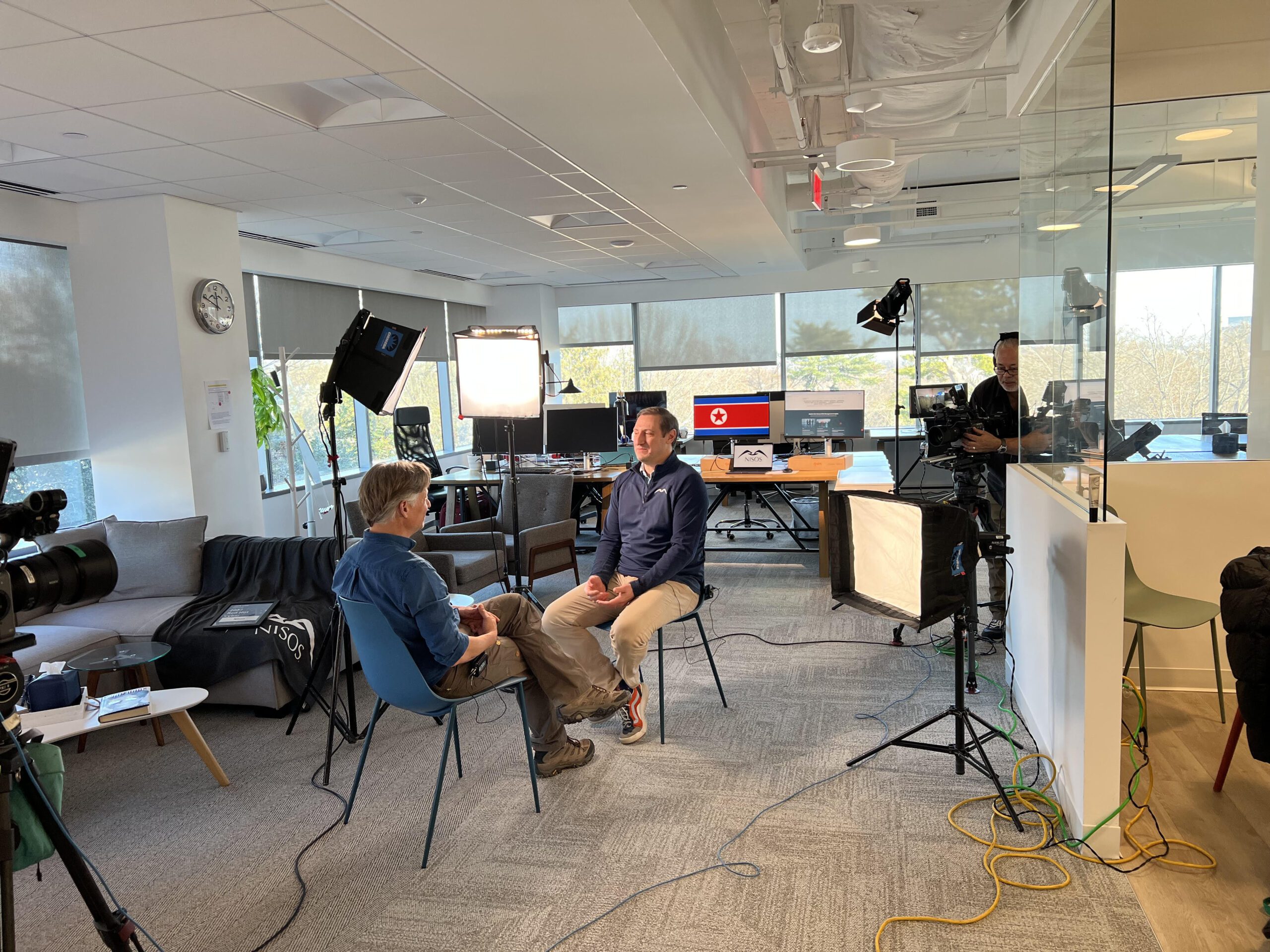
speaks with Nisos CEO Ryan LaSalle
Frequently Asked Questions (FAQs) about the Nisos Investigation Featured on NBC News
What Nisos investigation was featured on NBC News?
NBC News featured Nisos’s investigation into a North Korean employment fraud operation targeting U.S. companies. The investigation began after a suspicious candidate applied to Nisos and evolved into a months-long intelligence operation conducted in collaboration with law enforcement.
What did Nisos uncover about the DPRK employment fraud operation?
Why does this investigation matter for employers?
Where can I read Nisos’s full research on DPRK employment fraud?
About Nisos®
Nisos is a trusted digital investigations partner specializing in unmasking human risk. We operate as an extension of security, risk, legal, people strategy, and trust and safety teams to protect their people and their business. Our open source intelligence services help enterprise teams mitigate risk, make critical decisions, and impose real world consequences. For more information, visit: https://nisos.com.