
Inside the Digital Exposure Ecosystem: From Data Brokers to Dark Web Markets
How executive PII is exposed across data brokers, public records, social media, and dark web sources, and what it means for security teams.
Today’s threat actors have unprecedented access to personally identifiable information (PII) through an interconnected web of platforms, databases, and marketplaces – each presenting unique challenges for protection teams.
This interconnected network is often referred to as the digital exposure ecosystem, where executive PII is continuously collected, shared, and resurfaced across platforms.
Where Does Digital Exposure Actually Happen?
Digital exposures occur across multiple platforms including data brokers, public records repositories, social media, and dark web sources. These channels continuously collect and distribute sensitive personal information about high-profile individuals, creating persistent security vulnerabilities.
What makes this ecosystem particularly challenging is its dynamic nature. Websites hosting PII regularly change, disappear, rebrand, or emerge. Security teams must maintain dedicated monitoring to stay ahead of these ecosystem shifts, knowing where to look when sites go defunct and new ones appear.
Data Broker Platforms: How Personal Information Becomes Exposed
Data broker sites represent one of the most significant sources of executive PII exposure. They aggregate personal information from numerous sources and make it readily available online, often for minimal cost or even free of charge.
The most common data broker platforms exposing high-profile individual information include:
1. People Search Sites
These specialized platforms assemble comprehensive profiles containing home addresses, phone numbers, email addresses, and family connections. Their business model revolves around making this information easily accessible – precisely what protection teams need to prevent.
2. Background Check Services
While marketed for employment screening or tenant verification, these services collect extensive personal information that becomes accessible to anyone willing to pay a small fee. The legitimization of these services for business purposes creates a challenge for security teams seeking to limit executive exposure.
3. Address and Property Aggregators
These platforms focus specifically on real estate data and often reveal home addresses, property values, and – most concerning from a security perspective – exterior and interior photographs of executives’ homes. The Minnesota shooter case provided sobering evidence of how these sites can be weaponized, with investigators finding the attacker’s notebook filled with research into various PII sites.
4. Professional Profile Aggregators
These services compile career information that can reveal organizational hierarchy, helping threat actors identify high-profile targets within companies. They often connect professional data with personal information, creating comprehensive profiles.
Public Records: The Hardest Exposure to Control
Public records present a particularly difficult challenge as they represent legally accessible repositories of potentially sensitive information:
- County property records containing detailed home ownership information, property values, mortgage amounts, and property images
- Voter registration information with home addresses
- Court records from lawsuit filings, divorce proceedings, and other legal matters
- Business filings that often list executive home addresses, especially for smaller companies
- Licensing boards and professional licenses that frequently include home addresses
The legitimacy and permanence of these records make them especially difficult to manage from a security perspective.
Social Media: Hidden Risks of Personal Information Exposure
Social media exposure risks often extend beyond what individuals intentionally share, creating indirect pathways for personal information to become visible.
While most security teams understand the basics of social media exposure, technical nuances often create blind spots in protection strategies.
- Metadata exploitation: Photos and videos shared by high-profile individuals or their family members frequently contain extractable metadata revealing precise locations, device information, and timing details
- Historical content mining: Long-established social accounts may contain information posted before an individual reached a prominent position
- Third-party tagging: Even executives who avoid social media personally may appear in posts, tags, and photos shared by colleagues or event organizers
Dark Web: Where Exposed Data Becomes Actionable
The dark web is one of the primary environments where exposed personal data becomes actionable through targeting, coordination, and exploitation.
To effectively manage this risk, security teams must be equipped to monitor:
- Credentialed access forums: Where stolen credentials are bought and sold, potentially compromising executive email accounts or passwords
- Targeting discussions: Extremist forums and groups often discuss potential targets, sharing research methods and gathered intelligence
- Doxxing repositories: Collections of personal information assembled specifically to enable harassment or targeting
- Breach data aggregation: The dark web often contains more complete datasets from breaches than what appears on public notification sites
How to Monitor the Digital Exposure Ecosystem
Effective protection requires continuous monitoring across the full digital exposure ecosystem.
Our research shows that 98% of executives have property information visible online, and 100% have experienced email data breaches.
Security professionals must develop capabilities or partnerships that allow them to:
- Continuously scan data broker sites for exposed executive information
- Monitor public records for new filings that could expose sensitive details
- Implement social media monitoring for both the executive and their family members
- Establish dark web intelligence capabilities to detect emerging threats
Why Digital Exposure Keeps Reappearing Online
One of the most technical challenges in managing digital exposure is the persistence of information. Removed data frequently reappears on the same platforms or migrates to new ones.
This requires automated monitoring systems that regularly scan key platforms for reappearing information and establish alert thresholds for quick response when critical information resurfaces.
This is why one-time PII removal is rarely sufficient and why continuous monitoring is required to manage digital exposure effectively.
How to Assess Your Organization’s Digital Exposure Risk
When assessing your capabilities to manage digital exposure, consider:
- Your team’s expertise in navigating these diverse platforms
- Your monitoring capabilities across the entire digital exposure ecosystem
- Your response protocols for different types of exposures
- Your ability to manage ongoing removal requirements, which often involve complex authentication processes
How to Reduce Executive Digital Exposure Over Time
For corporate security teams protecting high-profile individuals, managing the digital exposure ecosystem requires specialized expertise and dedicated resources. It is not a one-time action.
Many organizations find that partnering with specialized providers is the most efficient way to achieve meaningful and sustained risk reduction.
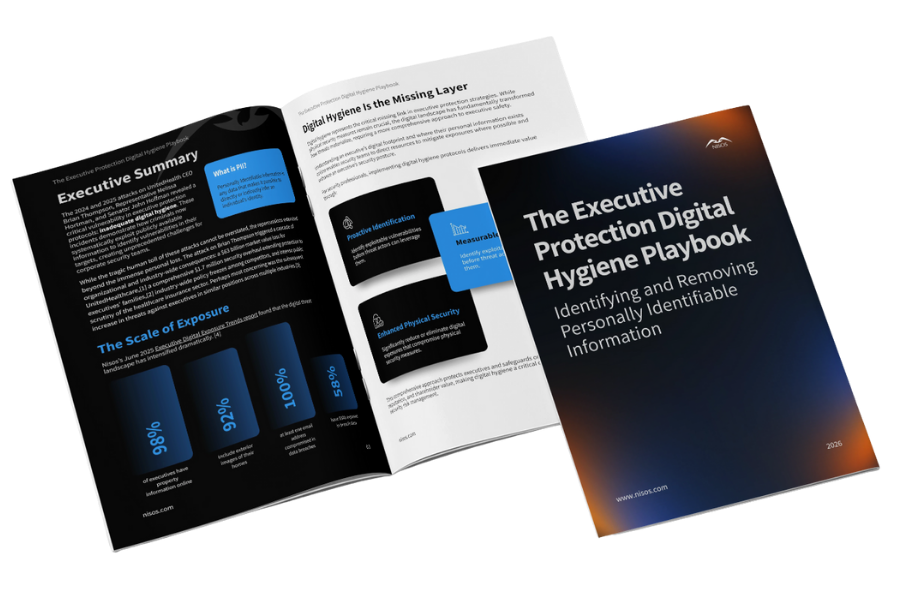
Our comprehensive Executive Protection Digital Hygiene Playbook provides detailed guidance on navigating this complex ecosystem and implementing effective protection measures.
Download it today to enhance your team’s capabilities in managing digital exposures across all platforms.
Frequently Asked Questions (FAQs) on the Digital Exposure Ecosystem
What is the digital exposure ecosystem?
Why is executive PII exposure a security risk?
What role do data brokers play in digital exposure?
Can digital exposure be fully removed?
How can organizations reduce executive digital exposure?
About Nisos®
Nisos is a trusted digital investigations partner specializing in unmasking human risk. We operate as an extension of security, risk, legal, people strategy, and trust and safety teams to protect their people and their business. Our open source intelligence services help enterprise teams mitigate risk, make critical decisions, and impose real world consequences. For more information, visit: https://nisos.com.