
What Is a Trusted Workforce Program and Why Does It Matter?
Why the Name of Your Program Matters
When organizations rename their “insider threat program” to a “trusted workforce program”, the most common reaction is skepticism. It sounds like a communications exercise; a way to make something uncomfortable sound palatable. It is much more than this.
The name of a program shapes how people inside the organization understand it, talk about it, and engage with it. And in a program that depends on employees reporting concerns, managers sharing observations, and HR partners flagging early warning signs, that engagement is not a nice-to-have. It is a core operational requirement.
Get the framing wrong and you undermine the very thing you are trying to build.
What Is an Insider Threat Program?
An insider threat program is a structured organizational effort to identify, assess, and respond to risks posed by individuals with authorized access to the organization’s assets (its data, systems, facilities, and people).
The traditional model focuses on detection and deterrence: monitoring for anomalous behavior, investigating concerns, and taking action when risk indicators emerge. It is reactive by design, relying on the identification of suspicious activity before intervention begins. Success is measured by detecting and stopping malicious actors before they can cause significant harm.
That model made sense for the threat environment it was designed for, where insider risk was primarily associated with espionage, sabotage, and deliberate theft of intellectual property. Think disgruntled employees, corporate spies, even nation-state actors seeking to infiltrate sensitive organizations.
But while those threats still exist, they are no longer the whole picture.
How the Insider Threat Landscape Has Changed
Today, insider risk is broader, more varied, and more human than the traditional model accounts for.
The shift to remote and hybrid work has dissolved the physical perimeter that once defined the boundary between inside and outside the organization. Employees work from home networks, use personal devices, and operate outside the direct line of sight of their employers. The concept of a clearly defined “inside”, where trusted people operate, has become much harder to maintain.
At the same time, the motivations driving insider risk have expanded. Modern insider incidents are increasingly driven by financial vulnerability, personal stress, workplace grievance, or external coercion, not just deliberate malice. An employee manipulated into sharing access credentials because they are under financial pressure is an insider risk, even if they never intended to cause harm.
Employment fraud has added another dimension entirely. AI-generated resumes, synthetic identities, and deepfake technology have made it possible for individuals, including state-aligned actors, to fabricate professional histories and secure legitimate positions inside organizations they intend to exploit. Insider risk now begins before an employee’s first day.
A program built to catch spies is not built to catch all of this.
What Is a Trusted Workforce Program?
A trusted workforce program addresses the same fundamental challenge as an insider threat program — protecting the organization from risks posed by people with authorized access — but it is built on a different premise.
Rather than assuming the primary job is catching bad actors, a trusted workforce program starts from the recognition that most employees are not threats. They are people — with pressures, vulnerabilities, and circumstances that can sometimes create risk, usually without any intent to cause harm.
That reframing has practical consequences for how the program is designed and operated.
It is proactive rather than reactive.
A trusted workforce program is designed to identify risk early — during the pre-hire phase, during employment, and at separation — rather than responding to incidents after they occur. It looks for the warning signs that precede harmful action, not just the action itself.
It is cross-functional rather than security-owned.
HR, Legal, IT, and Security all play a role. The signals that matter most often originate outside the security function: in an employee’s behavior, their personal circumstances, or their activity in the world beyond the organization’s network. A program that only security can see and act on will miss most of them.
It looks beyond the firewall.
This is perhaps the most important operational difference. Internal monitoring tools, such as access logs, behavioral analytics, and data loss prevention systems, only show what is happening inside the organization. But the early warning signs of insider risk frequently appear outside the organization first. Financial stress expressed on social media. Undisclosed second jobs creating conflicts of interest. Credentials appearing in breach datasets months before anyone attempts to use them. A trusted workforce program is designed to see these signals — responsibly, using publicly observable information — alongside what internal tools surface.
It is built around intervention, not just enforcement.
When early signals are detected, the first question is not “how do we build a case?” It is “what is happening with this person, and what does the organization need to do?” Sometimes the answer is a supportive conversation. Sometimes it is a referral to an Employee Assistance Program. Sometimes it is a security investigation. The right response depends on the full picture — which is why having one matters.
What the Name of Your Program Communicates
A program called “insider threat” sends a signal to every employee in the organization: you are a potential threat. The program exists to catch you if you step out of line. Reporting a concern about a colleague means getting them in trouble.
That signal (even if unintentional) creates exactly the conditions that make insider risk harder to manage. Employees don’t report concerns. Managers don’t share observations. HR partners don’t flag early warning signs because they are not sure where those signals are supposed to go, or what will happen when they get there.
A program called “trusted workforce” sends a different signal. It says: the organization’s default position is that you are trusted. The program exists to maintain and protect that trust, both for the organization and for the people in it. Reporting a concern is a way to help a colleague who might be struggling, not a way to get them fired.
That shift in signal changes behavior. And changed behavior changes outcomes.
Organizations with trusted workforce programs, which actively encourage reporting, create psychological safety for cross-functional information sharing. They frame early intervention as support rather than punishment, consistently identify risks earlier, and resolve them with less damage to the individuals involved and the organization as a whole.
What This Means for HR Leaders
For HR and People leaders, the trusted workforce framing is not just semantically preferable. It is operationally significant.
HR is uniquely positioned in a trusted workforce program because HR sees signals that no monitoring tool can capture. A manager’s observation that an employee seems withdrawn. An employee relations conversation that surfaces financial stress. A pattern of interpersonal conflict that precedes a performance decline. These are early warning signs of insider risk, and they exist almost exclusively in the human relationships that HR manages.
But those signals only become useful if there is a clear, trusted channel for them to flow into a cross-functional risk conversation. Building that channel — defining HR’s role in the program, establishing how observations are shared and acted on, and ensuring that HR’s involvement is scoped and protected — is one of the most impactful things a People leader can do for their organization’s insider risk posture.
It is also, notably, work that does not require HR to become a security function. It requires HR to do what HR does well — understand people, build relationships, and create structures that support healthy, accountable workplace cultures — in partnership with the teams responsible for organizational security.
Why Trusted Workforce Programs Look Beyond the Firewall
One of the most significant developments in trusted workforce program design over the past several years is the growing recognition that external signals matter as much as internal ones, and that they often appear first.
By the time an insider risk shows up in internal telemetry, the risk has usually been developing for some time. The financial pressure that made someone susceptible to manipulation. The grievance that had been building in public posts for months. The undisclosed affiliation that created a conflict of interest no internal system was designed to detect.
Monitoring publicly observable information (open-source intelligence gathered from social media, public records, breach datasets, and other accessible sources) gives trusted workforce programs a meaningful timeline advantage. It surfaces risk earlier in the pathway, when intervention is more likely to be effective and less likely to result in serious harm.
This is not about surveilling employees or monitoring private communications. It is about seeing what is already visible — and seeing it systematically, rather than accidentally, when it is too late to act.
Building a Program That Works for the Long Term
A trusted workforce program is not a one-time project. It is an ongoing discipline that evolves as the organization grows, as the threat environment changes, and as the program itself matures.
The organizations that build these programs effectively share a few common characteristics. They treat insider risk as a cross-functional responsibility rather than a security problem. They design their programs around early intervention rather than late-stage enforcement. They look in both directions: inside the organization, where incidents eventually surface, and outside it, where the warning signs appear first. And they frame the whole effort around trust rather than suspicion, because they understand that a workforce that feels trusted is a workforce more likely to act in the organization’s best interests.
The name is not the whole program. But it is the signal that shapes everything else, including how employees understand the effort, how willingly they participate in it, and whether the program builds the trust it depends on or quietly erodes it.
That is why the shift from insider threat to trusted workforce is more than a rebrand. It is a recognition that protecting an organization and respecting the people in it are not competing goals. They have the same goal.
Where to Start
Whether your organization is building a trusted workforce program for the first time or maturing one that already exists, the most valuable first step is an honest look at what your current approach can and cannot see, and how the people in your organization understand it.
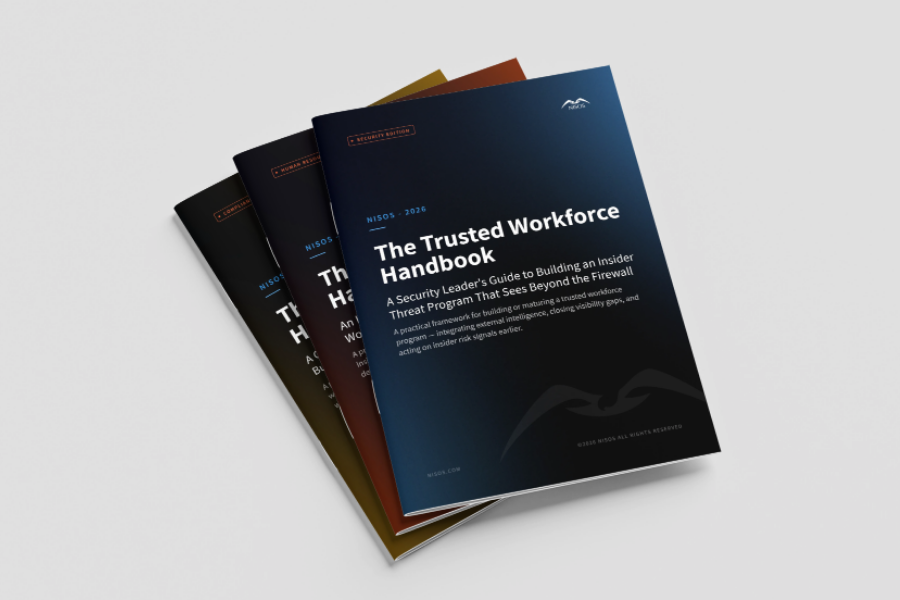
The Trusted Workforce Handbook is a practical guide to doing exactly that. It covers what modern insider risk looks like, why most programs miss the earliest warning signs, how to build a cross-functional program that works, and a self-assessment to help you identify where your program stands today. It is available in three editions — for security leaders, People and HR leaders, and Compliance and Risk leaders — because a trusted workforce program is a shared responsibility.
Frequently Asked Questions (FAQs) on Insider Risk Programs
What is a trusted workforce program?
A trusted workforce program helps organizations identify, assess, and reduce human risk throughout the employee lifecycle. It combines Security, HR, Legal, and other business functions to detect risks early and strengthen workforce trust.
Why are organizations replacing insider threat programs with trusted workforce programs?
How is a trusted workforce program different from an insider threat program?
Who should be involved in a trusted workforce program?
Why do trusted workforce programs look beyond the firewall?
How can organizations build a trusted workforce program?
About Nisos®
Nisos is a trusted digital investigations partner specializing in unmasking human risk. We operate as an extension of security, risk, legal, people strategy, and trust and safety teams to protect their people and their business. Our open source intelligence services help enterprise teams mitigate risk, make critical decisions, and impose real world consequences. For more information, visit: https://nisos.com.